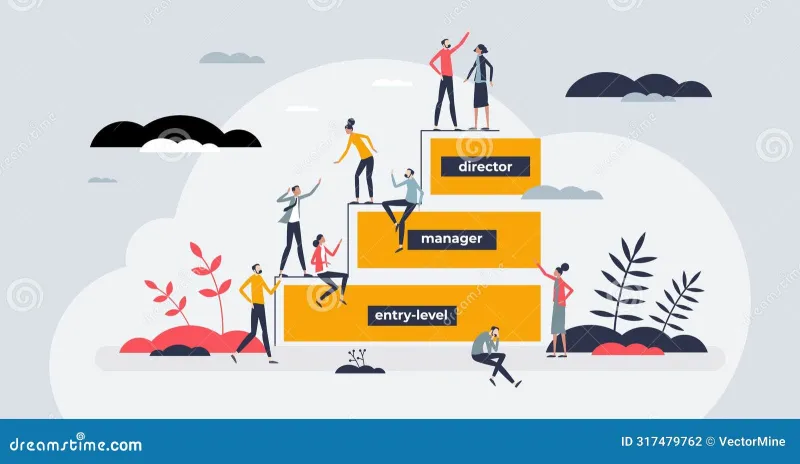
The Career Ladder Is Broken If the Only Rung Left Is 'Manager'

There's a ritual that plays out in offices across the country every single day. Someone crushes it as an engineer, a designer, a sales rep, a researcher — whatever their craft — and leadership responds the only way it knows how: by promoting them out of the thing they're actually great at.
Congratulations. You're a manager now.
It sounds like a reward. Often, it's a trap.
The Myth That Mastery Transfers
Here's the core problem: being exceptional at doing something and being good at leading people who do something are two entirely different jobs. They require different instincts, different emotional tools, and honestly, different personalities.
A brilliant software engineer spends their best hours in deep focus — heads down, solving hard problems, iterating in solitude. A great engineering manager spends their best hours in other people's problems — navigating conflict, running one-on-ones, translating business priorities into team direction. The overlap is smaller than most organizations want to admit.
This isn't a controversial insight. The research has been pointing this way for decades. But companies keep doing it anyway, because the career ladder most of them built only has one direction: up, and up means managing people.
When there's no other path to a raise, a title bump, or a sense of advancement, talented people take the management role — even when they don't want it, even when they're not wired for it — because the alternative is stagnation.
What Actually Happens Next
The outcomes tend to follow a predictable pattern.
Take someone like Marcus, a senior data analyst at a mid-size logistics company in Atlanta. For six years, he was the go-to person for any complex modeling project. His team relied on his instincts. His manager relied on his output. When a director-level opening came up, leadership pushed him toward it. He said yes because it felt like the next step.
Eighteen months later, Marcus was miserable. He spent most of his day in meetings he found draining, managing performance reviews he didn't feel equipped to give, and watching his actual analytical skills rust from disuse. His team sensed his discomfort. Morale dropped. Two of his direct reports left within a year. Marcus eventually requested a lateral move back to an individual contributor role — a move that felt, to him, like failure, even though it wasn't.
Or consider Priya, a UX designer at a fintech startup in Austin who was promoted to design lead after consistently delivering some of the company's best product work. Within a year, she'd stopped designing almost entirely. She was reviewing other people's work, attending roadmap meetings, and mediating creative disagreements. The craft that made her exceptional — and that she genuinely loved — had been replaced by a job she was doing out of obligation.
These aren't edge cases. They're the norm.
The Hidden Cost to Everyone
This pattern doesn't just hurt the individual. It creates a cascade of damage.
First, you lose the output of your best contributor. The thing they were actually world-class at stops getting done, or gets handed off to someone less capable.
Second, you create a manager who's operating outside their strengths — which means the people reporting to them get subpar leadership. That affects engagement, retention, and performance across the whole team.
Third, and maybe most insidiously, you send a message to every other high performer watching: this is what success looks like here. More people start chasing a path that doesn't fit them. The cycle repeats.
And then leadership wonders why retention is struggling.
What Better Looks Like
The fix isn't complicated in concept, even if it takes real organizational will to execute. Companies need to build dual career tracks — legitimate, well-compensated paths for individual contributors that don't dead-end after a certain level.
Tech companies figured this out earlier than most. The concept of a "Staff Engineer" or "Principal Engineer" — roles that carry seniority, compensation, and organizational influence without requiring people management — has been normalized at places like Google, Stripe, and Shopify. The idea is simple: let your best technical people go deeper, not sideways into management.
But this model doesn't have to stay in tech. A top-performing sales strategist can become a Principal Strategist with mentorship responsibilities and cross-functional influence. A senior copywriter can evolve into a Creative Lead who shapes brand voice without managing headcount. The titles and structures will vary by industry — what matters is that the path is real, not cosmetic.
Here's what makes a dual track actually work:
1. Compensation parity. If the IC track caps out $30K below what a manager makes at the same level, you've built a fake choice. The tracks need to be genuinely comparable in pay and benefits.
2. Organizational visibility. Senior ICs should be in the rooms where decisions get made. If they're excluded from strategy conversations, the track feels like a consolation prize.
3. Honest conversations during promotion discussions. Managers should be asking: Does this person actually want to lead people? Have they shown any signal of that? Not just: Are they the best at their current job?
4. No stigma for staying IC. Culture has to actively reinforce that choosing depth over management is a valid, respected choice — not a sign that someone plateaued.
The Conversation Most Managers Avoid
There's also a simpler intervention that requires almost no structural change: just ask.
Before you promote someone into management, have a direct conversation about what they actually want. Not a leading question dressed up as a conversation — a real one. Some people genuinely want to lead teams. Some people want to go deeper into their craft. Some aren't sure yet. All of those answers are useful.
What's not useful is assuming that because someone is great at their job, they must want the job that comes after it.
Rethink What Advancement Means
At its core, this is a question about what we value at work — and whether our organizational structures actually reflect those values.
If we say we value expertise, mastery, and deep contribution, but our only path to advancement runs through managing people, we're not being honest. We're telling our best contributors that what they do well isn't quite enough on its own. That they need to become something else to matter more.
That's a costly message to send. And it's one that a lot of talented people are already hearing loud and clear — right before they update their LinkedIn profiles and start taking calls from recruiters.
The ladder doesn't have to be broken. But it does need more than one direction.